
Icy blue that British glass can actually carry
Icy-blue Tristone belongs only where the windows can carry it. Keep an hour-by-hour window test so a cold solid does not fall into grey in a north kitchen.
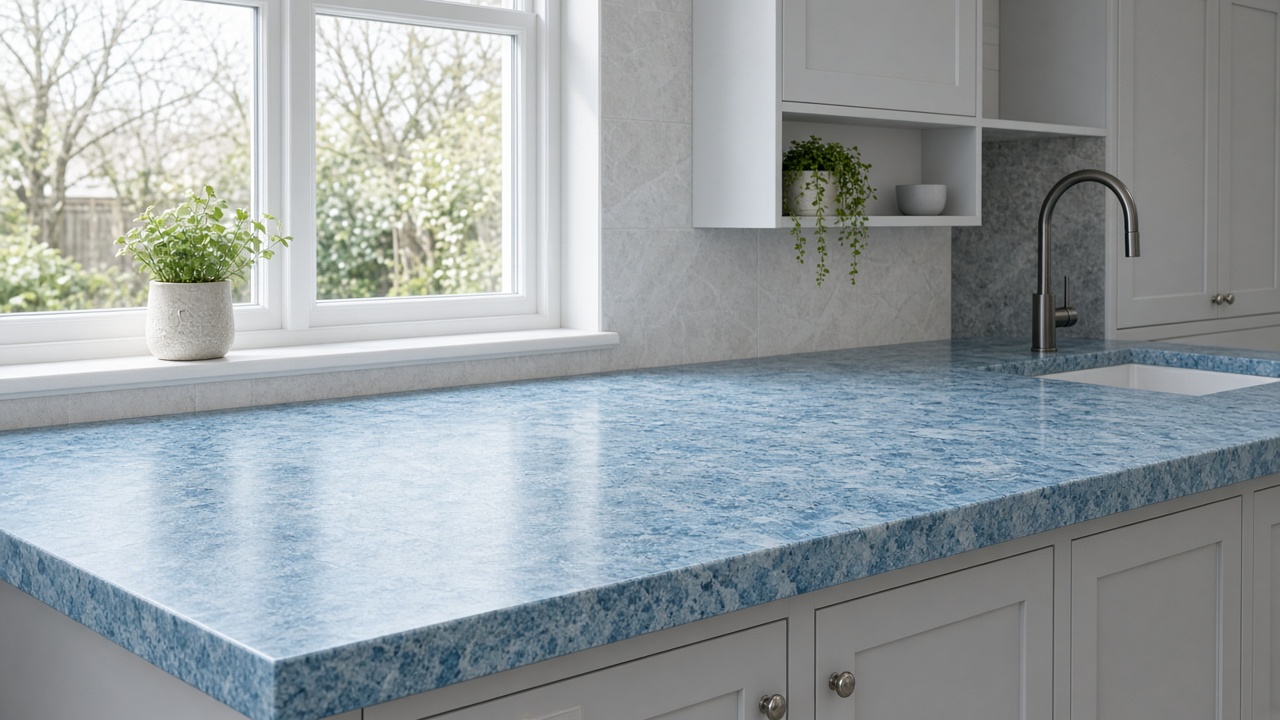
Icy blue is a mineral in a bright kitchen and a chill in a dim one. Beside a wide garden window it reads calm and contemporary. In a north terrace with a small rear light well it reads as damp plaster. The glass has to carry the colour. If it cannot, choose a warmer solid and keep blue for stools or a short bar. Tristone Worktops UK writes the windows into the specification, not around it. Saturated icy blue is a loud surface that British weather will edit every afternoon. Only honest glass keeps it blue after four.
Why a cold solid dies without bounce
Cool solids need light thrown back at them. Icy-blue Tristone is even, saturated colour with a slight chalk, which is what stops it looking like a swimming pool. That chalk is also why it fails in gloom. When daylight is thin the blue falls away and you are left with a cold grey that photographs as concrete and feels like a clinic.
North rooms in Britain already lean grey for half the year. An icy worktop doubles the chill unless a large window, a rooflight or a glass door feeds the plane. Under-cabinet LEDs will not save it; they only stripe a grey slab with a colder highlight. If the kitchen faces a brick alley, icy blue is almost never the honest choice, however pretty the chip looked in a sunlit showroom.
A working-day window test
Tape the sample on the actual run, not on the sill where the light is kind. Leave it for a working day and look four times. The test is meant to be dull. Icy blue that only charms at mid-morning is not a British kitchen colour.
- Breakfast, lamps off: does it still read as blue, or has it gone putty?
- Mid-morning at a garden window: the most generous hour, and it must not be your only judgement.
- Late afternoon under cloud: the British default, and the colour must still be itself.
- After dusk with only the LEDs you will keep: if it turns grey-lilac, the windows cannot carry it into the evening.
Rooms that can honestly hold a cold plane
Icy blue earns its keep where there is a wide rear window, an opened side return, or a roof lantern over the island. Pale oak and cream doors help because they bounce what light there is. Terracotta nearby can warm the blue into a coastal pairing, but only if both colours see the same glass; otherwise one end of the run lives and the other dies.
Handleless white kitchens can carry icy blue as the single loud surface if the splashback stays quiet. A veined marble-look upstand fights the solid and makes the blue look synthetic. Painted plaster or a matching pale Tristone splashback keeps the mineral reading. Forest green and icy blue together need more glass than most terraces have. Save that pairing for a kitchen that already feels like a conservatory. On a standard UK plot, pick one cold colour and let timber do the rest.
If the glass fails, change the colour
A failed window test is sometimes answered with a promise to add a rooflight later. Do not specify an icy-blue run on a building project that does not yet exist. Fit the colour the present windows can carry. A warmer mineral, a soft grey with a blue undertone, or a cream solid will still feel considered. Blue can arrive later in stools, a blind or a short breakfast bar if the extension happens.
If the test passes on a grey Tuesday and still reads as blue after the LEDs come on, icy Tristone can be the calmest loud colour in the house. Order the sample through Tristone Worktops UK, run the hour-by-hour test properly, and only then book a colour-matched template. Answer the window you have, not the one on the drawing.
Next step with Tristone Worktops
Order a sample, then request a fitted quote or browse the worktop collection. The colour should be judged in your own daylight before anyone templates the run.